
The Place Behind the Range Rover Legend
Some places become known because they were built to impress. Others become known because something happened there that the landscape never asked to carry. Workhouse Lane, near Rettendon in Essex, falls into the second category. It is not a grand street, a famous junction or a place designed for attention. It is a rural Essex lane, close to farmland, open fields and the old road network that once carried traffic between Chelmsford, Southend and the surrounding villages.
Yet this quiet farm track became one of the most discussed locations in modern British true crime history. In December 1995, a metallic blue Range Rover was found there with three men dead inside. The names, the convictions, the appeals, the films and the arguments have all been covered elsewhere. This article is about the place itself: the lane, the setting, the geography, the access, the atmosphere, the road layout, the later fascination, and the myths that have grown around a remote strip of Essex countryside.
Workhouse Lane is important because the location shaped the story. It was isolated enough to make the discovery shocking, but not so remote that it was impossible to reach. It was close enough to the A130 to be accessible, yet tucked far enough away to feel hidden. That combination is why the location has endured. It sits in that strange middle ground between everyday countryside and national folklore.
Where Is Workhouse Lane?
Workhouse Lane is near Rettendon, a village area in Essex, not far from Chelmsford. Contemporary reporting placed the discovery site on the outskirts of Rettendon and described the lane as being around 250 yards from the main A130 road from Chelmsford to Southend. That detail matters because it shows the location was not buried miles into private countryside. It was near a major road of the time, but still rural enough to be quiet, dark and separated from public view.
Geograph, the British location photography archive, identifies the entrance to Workhouse Lane near Rettendon Place, Essex, and classifies it as a farm track. Its listed subject location is around OS grid reference TQ 770 967, with WGS84 coordinates given as approximately 51.64124 north and 0.55689 east. Those figures put it in the flat, open Essex landscape south east of Chelmsford, close to the road routes that have long connected villages, farms and commuter settlements across the county.
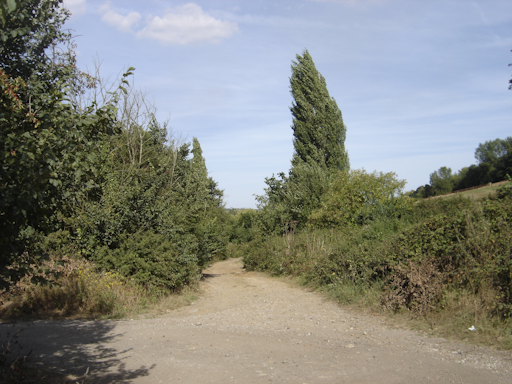
The lane itself is not a dramatic location in the cinematic sense. It is not mountainous, wooded in the way people might imagine from crime films, or architecturally striking. Its power lies in its ordinariness. It is the kind of rural access route people pass without noticing, a road edge, a track, a gate, a field boundary. That ordinary character is part of why the story attached to it feels so unsettling.
The wider area around Rettendon includes village roads, agricultural land, scattered properties and road links that have changed over time. The modern A130 is not exactly the same road experience that existed in 1995. Later road improvement schemes altered the traffic pattern, with the A130 bypass project opening in sections in 2002 and 2003. That means the present-day road context is not identical to the one that existed when the Range Rover was found.
The Road Network in 1995
To understand Workhouse Lane properly, it helps to understand the old road network around it. In 1995, the A130 was still the important local road reference used in early reports. The Independent described the murder site as being 250 yards from the main A130 road from Chelmsford to Southend. That made it close to movement, close to traffic, and close to a route that people in south Essex would have known well.
But closeness to a main road does not mean visibility. A car can leave a main road, turn into a lane and vanish from casual view very quickly in the countryside. This is especially true at night. A track does not need to be miles from civilisation to feel isolated. It only needs hedges, darkness, fields, a lack of houses, and no reason for passing drivers to look down it.
The A130’s later development changed the character of the area. The bypass project, built as a major local authority road scheme, opened its northern section between Chelmsford and the A132 Rettendon Turnpike in January 2002, followed by the southern section in February 2003. That later dual-carriageway infrastructure changed flows of traffic and helped remove some through traffic from older routes.
This is one of the reasons modern visitors can misunderstand the location. They look at today’s road maps, today’s traffic routes and today’s junctions, then project that backwards onto 1995. The physical lane may still be there, but the road environment around it has moved on. A proper location article has to hold both pictures in mind: the 1995 access route and the present-day landscape.
A Lane Close to the Main Road, Yet Out of Sight
The phrase “remote farm track” can be misleading if it makes people imagine somewhere impossibly far from roads or villages. Workhouse Lane was remote in a more practical and psychological sense. It was close enough to a main road to be reachable, but far enough from normal observation to become private once a vehicle was tucked away. That is the exact kind of remoteness that matters in cases like this.
At night, a place like Workhouse Lane would have felt very different from how it appears in a daytime photograph. Rural Essex lanes can become pitch-black away from built-up areas. Street lighting is limited or absent, fields absorb sound, and hedges or gates can make a parked vehicle hard to notice. Even a large Range Rover would not necessarily draw attention if it was positioned away from the main road.
There is also the question of why anyone would be there. Farm tracks are not social spaces. They are functional spaces. They are used by landowners, farm workers, gamekeepers, walkers in some cases, and people who have a reason to access fields. A vehicle found there early in the morning may first appear to be badly parked, broken down, or connected to rural work. That helps explain why the first moments of discovery were not instantly understood as a major crime scene.
The Independent reported that Ken Jiggins and Peter Theobald found the Range Rover at around 8am while on their way to feed pheasants in nearby fields. That detail anchors the location in its real use. This was not an abandoned industrial estate or a city car park. It was working countryside, with ordinary rural routines continuing until they were interrupted by an extraordinary discovery.
The Morning Discovery
The discovery itself shows how ordinary the place was before it became infamous. Peter Theobald, who farmed the land, was driving with Ken Jiggins when they came across the Range Rover. Jiggins got out, approached the vehicle and, according to the report, initially thought the men inside looked as though they had fallen asleep. It was only after looking again that he realised what had happened.
That moment is central to the identity of the lane. Workhouse Lane was not discovered by police during a planned raid. It was not revealed by an informant standing beside detectives. It became known because two men carrying out a normal countryside task found a vehicle where it should not have been, then realised the reality inside it. That contrast between routine and horror is one reason the location became so fixed in public memory.
The lane was then sealed off by police. The Range Rover, still containing the bodies, was lifted onto a police low-loader, covered with a tarpaulin and taken away for forensic analysis. The location had shifted within hours from a rural access track to a protected crime scene. Tyre marks, footprints, vehicle positioning, sight lines and access points would all have mattered.
From that point onward, Workhouse Lane was no longer only a lane. It became a point on the map of British criminal history. The name began to appear in reports, later documentaries, books, forum threads and online discussions. A place that most people outside the immediate area would never have heard of became a reference point for decades of speculation.
The Physical Character of the Track
Workhouse Lane’s physical character is part of the fascination. It is described in location archives as a farm track, and contemporary reports treated it as a lonely lane on the outskirts of Rettendon. That tells us it was a route with a practical agricultural purpose rather than a through road designed for heavy public traffic.
A track like this creates a different kind of space from a normal road. It narrows options. A vehicle entering may have limited room to turn around. Gates, field boundaries and verges become important. The further a car moves from the main road, the more committed it becomes to the track. Even small details such as mud, weather, field edges and tyre impressions can become meaningful in an investigation.
Online mapping discussions have long tried to identify the exact position where the Range Rover stopped. Some user-generated map entries place the claimed position beyond the entrance and refer to field boundaries or gates. These claims are interesting, but they should be treated with caution unless supported by official plans, police photographs or court exhibits. The public often wants one exact pin on a map, but old rural crime scenes are rarely that simple.
The safest conclusion is that the vehicle was found on or just off Workhouse Lane in a rural track setting near Rettendon, close to the A130 as it then functioned. That is enough to understand the place without pretending every online coordinate or modern visitor video is definitive.
Why This Location Was So Effective as a Meeting Point
Without getting into the wider crime theories, the location had obvious qualities that made it suitable for a private meeting. It was reachable from known Essex road routes. It was quiet. It was rural. It had enough separation from houses and passing pedestrians to make interruption less likely. Yet it was not so remote that getting there required specialist knowledge or off-road ability.
That balance is crucial. Truly remote places can be difficult to reach and can raise suspicion if the journey is too strange. Semi-remote rural places are different. They are close enough to normal life to be explainable, but hidden enough for people to feel unobserved. Workhouse Lane appears to fit that pattern perfectly.
The presence of a Range Rover also made sense in that environment. A large four-wheel-drive vehicle did not look absurd on a rural farm track. It would not have drawn the same visual contradiction as a sports car or city saloon might have done. In that setting, the vehicle and the lane almost matched each other too well.
That may be one reason the story remains so vivid. The location was not random scenery. It formed part of the plausibility of the meeting, the discovery and the later mythology. Workhouse Lane gave the case its rural silence.
The Lane in Public Memory
Many crime scenes fade from public memory once the investigation ends. Workhouse Lane did not. It became part of a recurring British true crime circuit, mentioned in articles, documentaries, YouTube videos, forums and social media posts. Some people discuss it historically. Others visit it out of curiosity. Some treat it almost like a landmark, which creates a difficult tension because it is also a real rural place connected to real people and private land.
The Geograph photograph of the entrance to Workhouse Lane, taken in 2009 and submitted in 2011, is a good example of how the location became visually archived. It is not a dramatic image. It shows an entrance, a rural track and the kind of scenery that would usually be of interest only to walkers, local historians or map contributors. But because of the association, the image has been viewed thousands of times.
This is how infamous locations change. The scene itself does not have to be visually extraordinary. The knowledge attached to it does the work. Once people know what happened nearby, a gate, a verge or a lane entrance becomes charged with meaning. Workhouse Lane is not famous because of what it looks like. It is famous because of what people know when they look at it.
That can be unfair on a village. Rettendon is more than one incident. It has residents, roads, farmland, local history and ordinary daily life. Yet the name is repeatedly dragged back to 1995. This is one of the costs of becoming attached to a notorious event. The place continues living, but the public keeps returning to the same frozen moment.
The Myth of Total Isolation
One of the biggest myths about Workhouse Lane is that it was impossibly isolated. It was certainly quiet and rural, but it was not in the middle of nowhere in the absolute sense. Early reporting placed it only around 250 yards from the main A130. That is a key detail because it changes how the location should be imagined.
The lane’s power was not distance. It was concealment. A place can be close to a road and still feel hidden. It can be minutes from traffic and still be silent enough for a parked vehicle to go unnoticed until morning. That is the type of rural remoteness Workhouse Lane represents.
This matters because exaggerated remoteness can distort the story. If people imagine an unreachable wilderness, they may misunderstand how the vehicle got there, how the scene was discovered, and why the location was selected. The real setting was subtler and more practical: accessible, familiar enough, but out of sight.
In many ways, that makes it more unsettling. It was not a faraway wasteland. It was an ordinary Essex farm track close to normal roads and normal routines.
The Myth of the Exact Online Pin
Another persistent myth is that the exact spot is easily and definitively known from internet maps. There are user-generated location markers, social media posts, drone videos and forum comments claiming to identify the precise place where the Range Rover stopped. Some may be close. Some may be based on police aerial photographs or local knowledge. Others may simply be copied from earlier guesses.
The problem is that online mapping is not the same as official evidence. A pin can be moved. A caption can be wrong. A screenshot can circulate for years without anyone checking its origin. Rural lanes also change subtly over time. Gates move, hedges grow, surfaces alter, entrances are repaired, and field access can be adjusted.
For an article like this, it is better to be honest. The entrance to Workhouse Lane is documented and photographed. The general scene is well established. The lane’s relationship to Rettendon and the A130 is supported by contemporary reporting. But the exact final parking position should be described carefully unless using police diagrams or court exhibits.
The mythology wants certainty. The evidence available to the public gives strong geography, but not always perfect precision.
The Myth That Nothing Has Changed
Some visitors talk about Workhouse Lane as if it has been preserved exactly as it was in December 1995. That is unlikely. Rural locations change slowly, but they do change. Road layouts nearby have changed, traffic patterns have changed, and the A130 bypass altered the wider road environment after the incident.
The entrance, fields and rural character may still feel recognisable, but the modern setting is not a time capsule. People looking at the lane today are seeing it through nearly three decades of physical change and cultural storytelling. That gap matters.
Even the way people approach the location has changed. In the 1990s, people relied on local knowledge, paper maps, road signs and memory. Today they use sat nav, Google Maps, drone footage, YouTube visits and online forums. That changes the relationship between the public and the place. The lane is no longer just found by those who know the area. It is searchable.
This searchable quality has created a new layer of attention. Workhouse Lane is not only a rural track now. It is a digital location, repeated and reinterpreted through screens.
The Myth of the Haunted Lane
Like many notorious locations, Workhouse Lane has attracted an atmosphere of ghost-story language. People describe it as eerie, cursed, haunted or oppressive. Some of that comes from the facts of the case. Some comes from arriving with the story already in mind. A quiet lane at dusk will feel very different if you know why it is famous.
There is no need to dress the place up as supernatural for it to have emotional weight. Its history is enough. The silence, the rural setting and the knowledge of what was found there all create a powerful reaction without inventing anything. Calling it haunted may make good social media content, but it can also cheapen the real history.
The more accurate description is that Workhouse Lane is a place with a heavy association. It is not visually dramatic, but it is psychologically loaded. People bring the darkness with them because they know the story before they arrive.
That is why the lane can look completely ordinary in photographs and still affect people. The mind fills in what the landscape no longer shows.
Respecting the Location
Any article about Workhouse Lane should mention respect. This is not a theme park, film set or public attraction. It is a real rural area, with landowners, residents, drivers, walkers and working countryside. The fact that the location is famous online does not mean people have a right to trespass, block access, fly drones irresponsibly or treat nearby property as part of the story.
True crime interest can easily become intrusive when it forgets that places keep living after the event. Farmers still need access. Residents still need privacy. Roads and tracks still need to function. A quiet location becoming a curiosity can be frustrating for the people who actually live and work around it.
There is also a moral side. The people found there were real people, whatever their backgrounds. The men who discovered the vehicle were real people. The police, forensic teams and local community had to deal with the immediate aftermath. Turning the lane into a thrill-seeking stop misses the weight of that.
The best way to understand Workhouse Lane is through research, maps, archived reporting and careful writing, not by treating the place like a trophy visit.
Why Workhouse Lane Still Matters
Workhouse Lane still matters because it shows how geography becomes part of a case. The story is not only about people and vehicles. It is about how a rural location can create opportunity, concealment, confusion and memory. The lane shaped what happened before discovery, how the discovery unfolded, and how the public imagined the case afterwards.
It also matters because it captures a specific version of Essex. Not the television Essex of nightclubs and catchphrases, and not the polished commuter-belt Essex of new housing and retail parks. This is older, quieter Essex: lanes, fields, road junctions, farm access, and settlements linked by routes that have been changed and bypassed over time.
The place continues to hold attention because it is both specific and ordinary. People can point to it on a map, yet it could almost be any rural lane. That is part of the discomfort. It reminds us that nationally known events often happen in places that were never supposed to be famous.
In the end, Workhouse Lane is not just the backdrop to the Range Rover story. It is one of the reasons the story endured. The lane gave the case its silence, its isolation, its visual identity and its enduring mystery.
Conclusion: A Quiet Lane With a Long Shadow
The remote Essex farm track at Workhouse Lane is not remarkable because of its appearance. It is remarkable because of what became attached to it. Close to the old A130, near Rettendon, surrounded by working countryside, it was accessible enough to reach and quiet enough to conceal. That combination made it central to one of Britain’s most infamous crime scenes.
The modern fascination with the lane says as much about us as it does about the place. We look for exact spots, surviving views, old road layouts, hidden meanings and clues in the landscape. We want the physical world to explain what happened. Sometimes it helps. Sometimes it only deepens the silence.
Workhouse Lane remains a real place, not just a name in a headline. It has changed, the roads around it have changed, and the public story has grown far beyond the physical track. Yet the lane still carries the same central fact: in December 1995, an ordinary rural access route became part of British criminal history, and it has never fully escaped that shadow.
Sources and Further Reading
- The Independent, 8 December 1995: Three men shot dead in gangland execution
- Geograph: The entrance to Workhouse Lane, near Rettendon Place, Essex
- Sky News: The Essex Murders background and later investigation coverage
- Laing: A130 Bypass project information
- SABRE Roads: A130 road history and route notes
- Wikimapia: User-generated location marker for the claimed Range Rover position